
Understanding Exercise ECG (Stress Test): What Doctors Look For When Your Heart Is Under Pressure
In my practice, I often meet patients who experience chest discomfort, shortness of breath, or unexplained fatigue during activity. One of the most useful tests I recommend in these situations is an Exercise ECG, also known as a stress test.
This test helps us understand how the heart performs when it is working harder—similar to what happens during brisk walking, climbing stairs, or exercise. Many heart problems only become noticeable when the heart is under stress, which is why this test provides valuable information that a resting ECG may not show.
What Is an Exercise ECG?
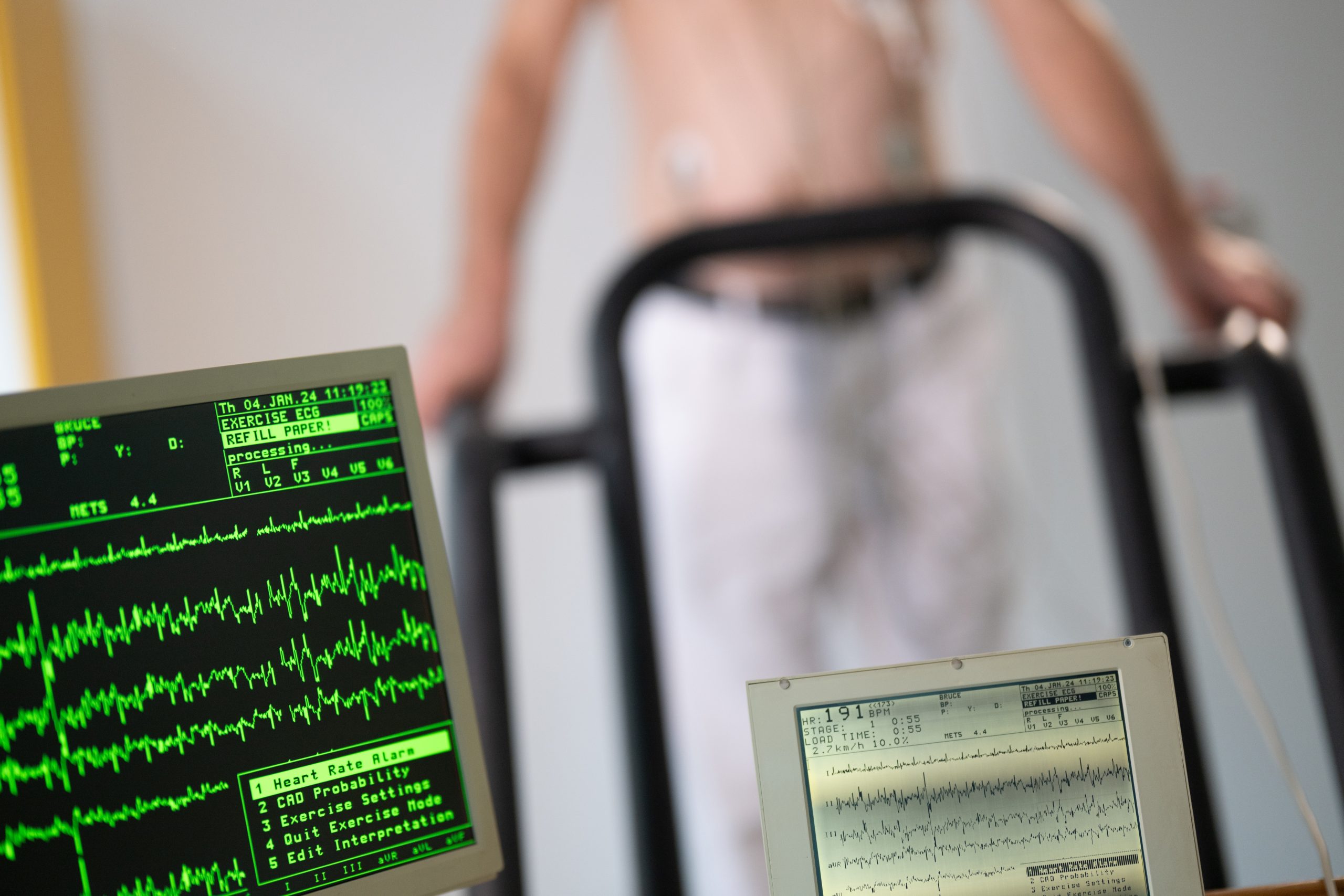
An Exercise ECG, or treadmill stress test, is a diagnostic procedure where the heart’s electrical activity is recorded while the patient exercises on a treadmill or stationary bike.
The speed and incline gradually increase, allowing the heart to work progressively harder. Throughout the test, we monitor:
- Heart rhythm
- Blood pressure
- ECG changes
- Symptoms such as chest pain or breathlessness
Why Do Doctors Recommend This Test?
I usually recommend an exercise ECG when I suspect reduced blood flow to the heart muscle or when patients have symptoms that need further evaluation.
Common reasons include:
- Chest pain or tightness during activity
- Unexplained shortness of breath
- Irregular heart rhythms during exertion
- Assessment after a heart procedure or treatment
- Screening for patients with risk factors such as diabetes, smoking, or high cholesterol
How the Test Is Performed
Before starting, small electrodes are attached to the chest to record heart signals. Blood pressure is also measured at intervals.
The patient begins walking slowly on the treadmill. Every few minutes, the intensity increases. The goal is to safely raise the heart rate while closely monitoring how the heart responds.
The test continues until:
- The target heart rate is reached
- Symptoms develop
- ECG changes suggest concern
- The patient requests to stop due to fatigue
What Can the Results Show?
An exercise ECG helps us evaluate whether the heart is receiving enough oxygen during stress.
Possible findings include:
- Normal response: Heart functions well under stress
- Reduced blood flow: May suggest narrowed heart arteries
- Abnormal rhythm: Irregular heartbeat during exertion
- Exercise intolerance: Early fatigue or abnormal blood pressure response
It is important to understand that this test does not directly “see” blocked arteries but helps us assess the likelihood of underlying coronary artery disease.
Is the Test Safe?
Yes, it is generally very safe when performed under medical supervision. We monitor the patient continuously, and the test is stopped immediately if any concerning signs appear.
Serious complications are extremely rare, but we always assess a patient’s suitability before recommending it.
When Should You Consider an Exercise ECG?
I often advise patients not to ignore recurring chest discomfort or unusual breathlessness, especially if it appears during physical activity.
You should consider evaluation if you experience:
- Chest tightness when walking or climbing stairs
- Unexplained fatigue with mild exertion
- Strong family history of heart disease
- Multiple cardiovascular risk factors
Early testing allows us to detect issues before they become serious.
Doctor's Insight
In many cases, patients assume that if a resting ECG is normal, their heart is completely fine. However, some conditions only appear when the heart is working harder.
The exercise ECG gives us a “stress situation” view of the heart, helping guide further treatment or reassurance. In my experience, it is a valuable tool for early detection and prevention of serious cardiac events.
– Dr. Teh Boon Teong
Consultant in Internal Medicine
Evercare Medical Care Centre, Penang, Malaysia.
Frequently Asked Questions
Is the stress test painful?
No, it is not painful. You simply walk on a treadmill while monitored.
How long does the test take?
Usually around 15–30 minutes including preparation.
Can I eat before the test?
Light meals are usually allowed, but heavy meals should be avoided beforehand.
What if I feel tired during the test?
The test is stopped immediately if you feel uncomfortable.
Does a normal result mean my heart is 100% healthy?
It reduces the likelihood of certain conditions but does not rule out all heart problems.