
Case Insight: Chronic Venous Ulcer and Compression Therapy
Introduction
We would like to share a clinical case (published with patient consent) involving one of our patients, a 45-year-old individual who presented with chronic venous ulcers affecting both legs.
Chronic venous ulcers can persist over a prolonged period and may be associated with underlying circulation issues. Without appropriate management, these wounds may recur and become increasingly difficult to heal.
Understanding Chronic Venous Ulcers
Chronic venous ulcers are commonly linked to venous insufficiency, where blood flow in the veins is impaired. This can lead to increased pressure in the lower limbs, resulting in swelling, skin changes, and delayed wound healing.
These ulcers often require long-term management, as addressing the underlying circulation problem is essential for sustained improvement.
Effective care involves not only treating the wound, but also improving venous return and reducing limb swelling.
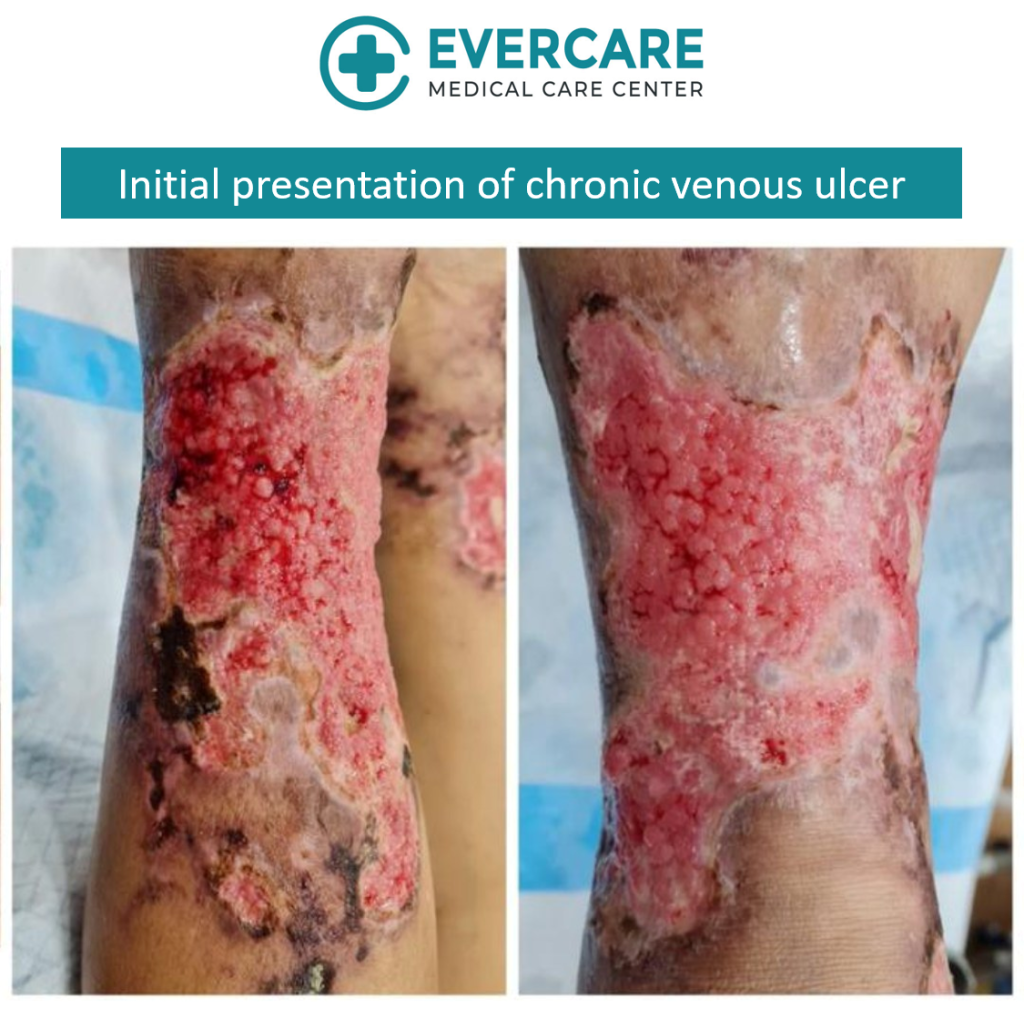
Treatment Approach
Management of chronic venous ulcers requires a structured and coordinated approach under clinical supervision.
This typically includes:
- Appropriate wound cleansing and dressing
- Compression therapy to support venous return
- Reduction of swelling (oedema control)
- Regular monitoring and follow-up
In this case, compression therapy played a key role in supporting circulation and creating an environment conducive to healing, alongside ongoing wound care and monitoring.
While the underlying causes differ, similar principles of structured wound care and ongoing monitoring apply across conditions, as seen in this pressure ulcer case, where pressure offloading supports healing.
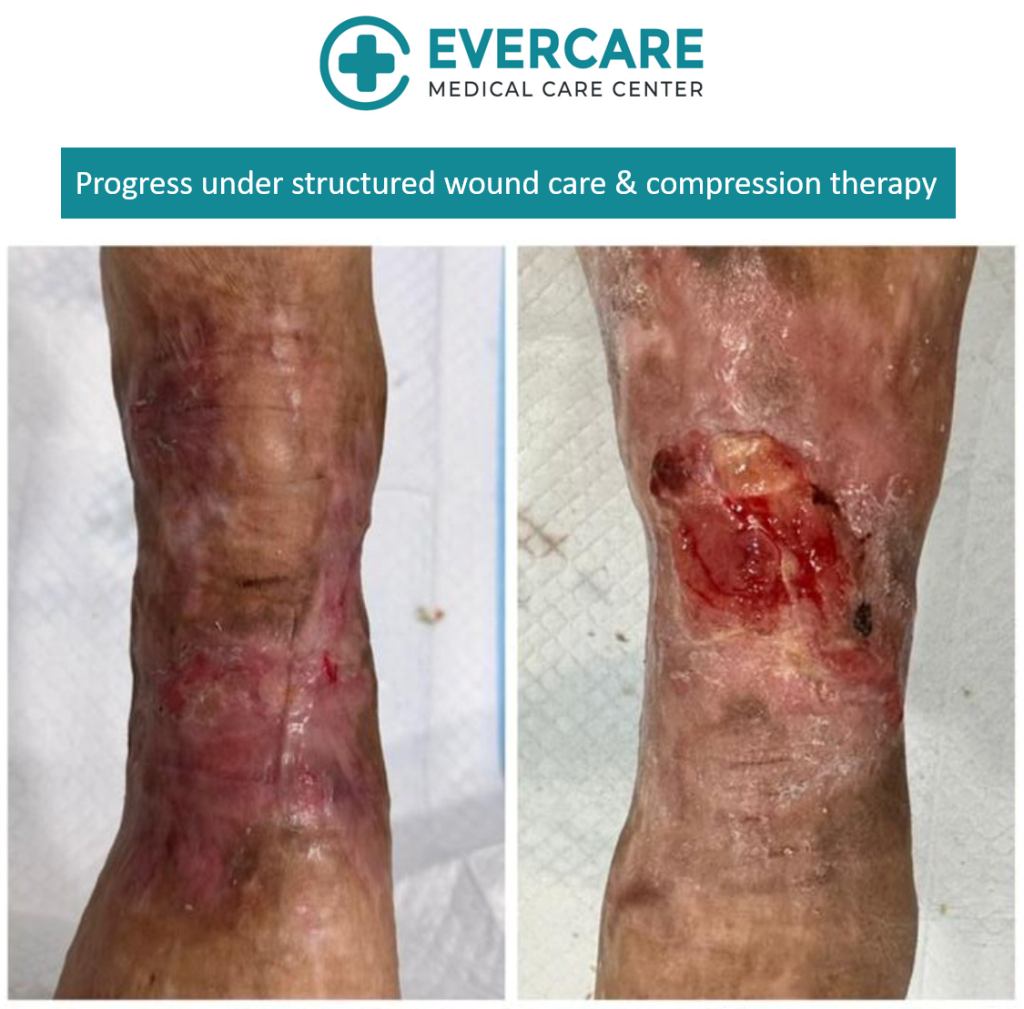
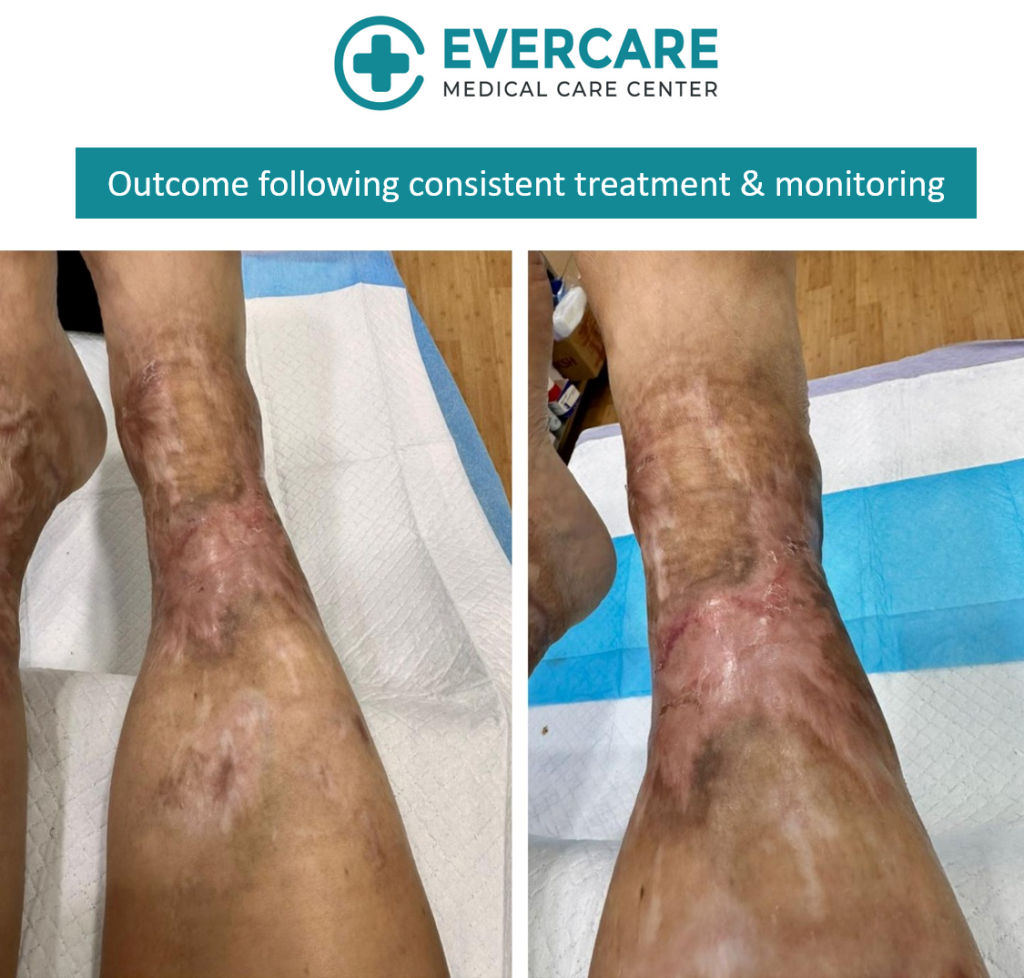
Healing Progress
With consistent care and adherence to treatment recommendations, gradual improvement in the wound condition was observed over time.
Chronic venous ulcers often require extended periods of care, and healing timelines may vary depending on the severity of the condition and patient factors. Regular monitoring allows for timely adjustments to the treatment plan.
Key Insights
Chronic venous ulcers require a targeted approach that addresses both the wound and the underlying circulatory issue. Without proper management, recurrence is common.
Compression therapy, together with structured wound care and consistent follow-up in a proper setup, plays a key role in supporting healing and reducing recurrence in chronic venous ulcers.
Advanced Wound Care Centre
Evercare Medical Care Centre, Penang, Malaysia.
Disclaimer
Images are shared with patient consent for educational purposes. Individual outcomes may vary depending on overall health and adherence to treatment.